Transparency and quality: Printing jute bags in coffee production
From cultivation and roasting to the finished product, coffee is a global cultural asset with a complex supply chain. This makes it all the more important to make every stage of this journey traceable. A key component of this traceability is the labeling of coffee sacks, which are usually made of sturdy jute or sisal.
Whether lot numbers, quality labels, bean varieties, or brand logos – the printing on a coffee sack contributes significantly to transparency, quality assurance, and brand identity.
But how can you achieve clean, durable printing on this uneven natural material? The edding compact printer series offers a precise and reliable solution that is specially tailored to industrial requirements and demanding surfaces such as jute.
Why printing on coffee sacks is so important
Labeling for traceability
Each coffee sack is given a lot number that makes it possible to trace the origin of the beans back to the plantation. This unique number is essential for quality control and traceability. If deviations occur during production, it can be determined precisely which batch is affected.
In addition to the lot number, other information such as weight, country of origin, export date, or quality grade is often printed directly on the bag. This information facilitates logistics and ensures that everyone involved in the supply chain can quickly and clearly identify the goods they are dealing with.
Brand identity and recognition value
More and more roasters and retailers are also using their jute bags as brand carriers. Logos, lettering, or slogans are printed on them to convey professionalism and make the bag usable beyond its pure function – for example, as a decorative or sustainable accessory.
A clean, high-contrast print not only ensures clarity, but also creates a strong brand impact – from the warehouse to the café.
Challenges when printing on jute bags
Printing on coffee sacks is technically challenging.
The material – usually jute or sisal – is coarse-textured, irregular and highly absorbent. Conventional methods quickly reach their limits here:
- Stencil printing with MEK rollers used to be standard practice. This involved applying ink manually through a stencil. The problem was that the print was often blurred or smudged.
- If there was too much paint, the ink would soak through the fabric, which was particularly critical when it came into contact with the coffee beans.
- To prevent this, protective films had to be glued into the bags – a labor-intensive and costly process.
- In addition, the ink took a long time to dry, which led to production delays.
In companies that print hundreds of bags every day, this meant a significant investment of time and quality risks.
The solution: printing on coffee sacks with edding compact printers
The edding printing systems provide a modern, economical, and reliable solution to these challenges.
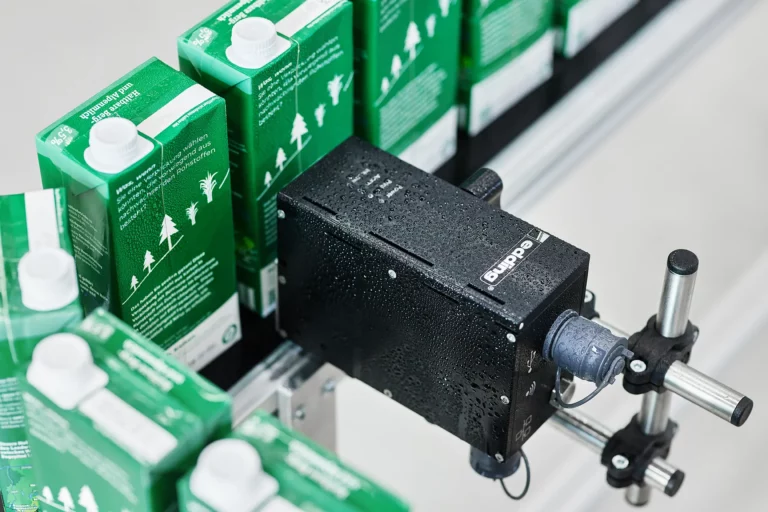
The edding compact printer series combines mobile flexibility, fast drying and high print quality – even on uneven or porous materials such as jute.
The edding portable 50 – mobile, robust, and versatile
The edding portable 50 is a handheld, battery-powered printing system that is particularly suitable for flexible use directly in the production process.
It offers decisive advantages for printing on coffee sacks:
- Quick-drying inks – the print is smudge-proof after just 1–2 seconds.
- Food-certified ink solutions developed by edding prevent contamination of coffee beans.
- Easy to use: The print head glides smoothly over the bag surface, ensuring clear, legible results.
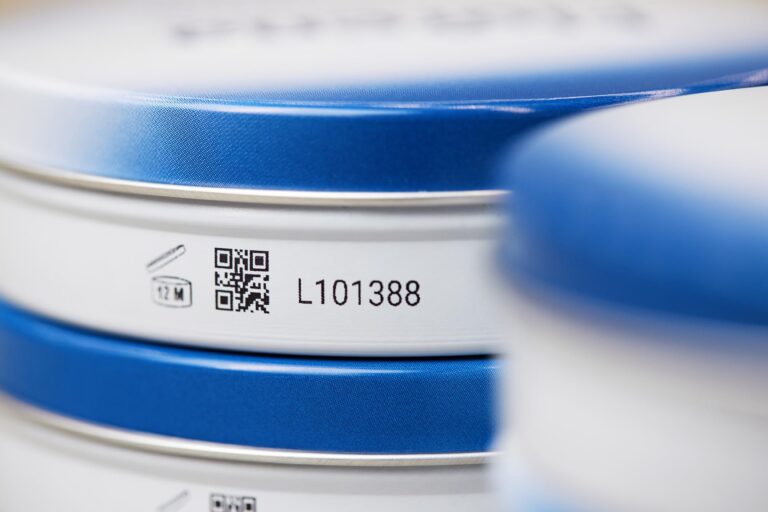
- High resolution for text, logos and 2D codes such as QR or DataMatrix.
- Scan & Print Module: Using an optional external scanner accessory, barcodes or QR codes can be scanned and the data printed directly without manual intervention.
This makes the edding portable 50 ideal for businesses of any size that want to label their coffee bags efficiently and securely.
Automatic printing with the edding in-line Pro
For larger production volumes, the edding in-line Pro is ideal in combination with a crossbar.
This system allows fully automatic printing, with the bags being precisely positioned and labeled one after the other.
Advantages at a glance:
- High processing speed with consistent quality.
- Integration into existing production processes possible.
- Customisable print layouts, including variable data such as time stamps, employee IDs, or production lines.
This allows track & trace codes or batch information to be applied directly during the packaging process – quickly, cleanly, and without additional effort.
New possibilities for traceability and customisation
The edding compact printer opens up completely new potential for coffee producers:
- Track & Trace at the bag level: Each bag can be labeled with an individual barcode or QR code. This enables complete traceability – from the plantation to the roasting machine.
- Custom printing: Retailers or roasters can have their own logo or design printed directly onto the bag – no external service providers needed.
- Efficient production processes: No templates, no drying, no reworking.
These advantages make edding printing systems a future-proof tool in modern coffee packaging.
Conclusion: Modern printing technology meets traditional coffee culture
Printing on coffee sacks is much more than just a practical step in logistics. It is a symbol of quality, transparency, and brand identity.
With edding printing systems, companies now have an efficient, clean and sustainable solution that meets the requirements of the modern coffee industry.
Whether mobile with the edding portable 50 or automated with the edding in-line Pro – the systems offer maximum flexibility, precision, and cost-effectiveness.