
Our solutions for marking and coding on concrete
Printing on concrete
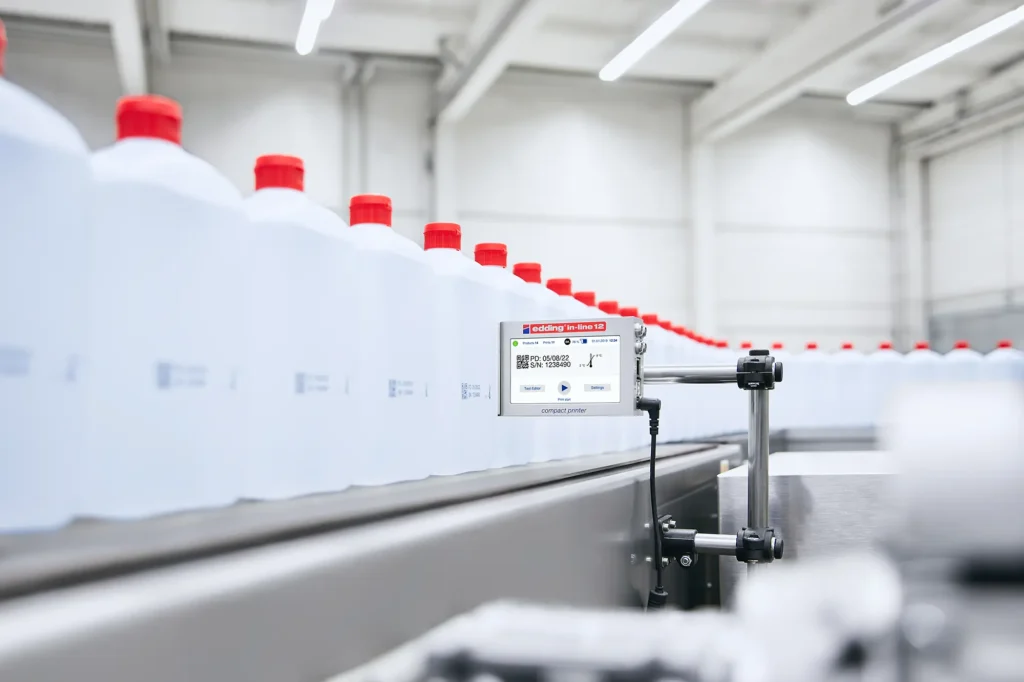
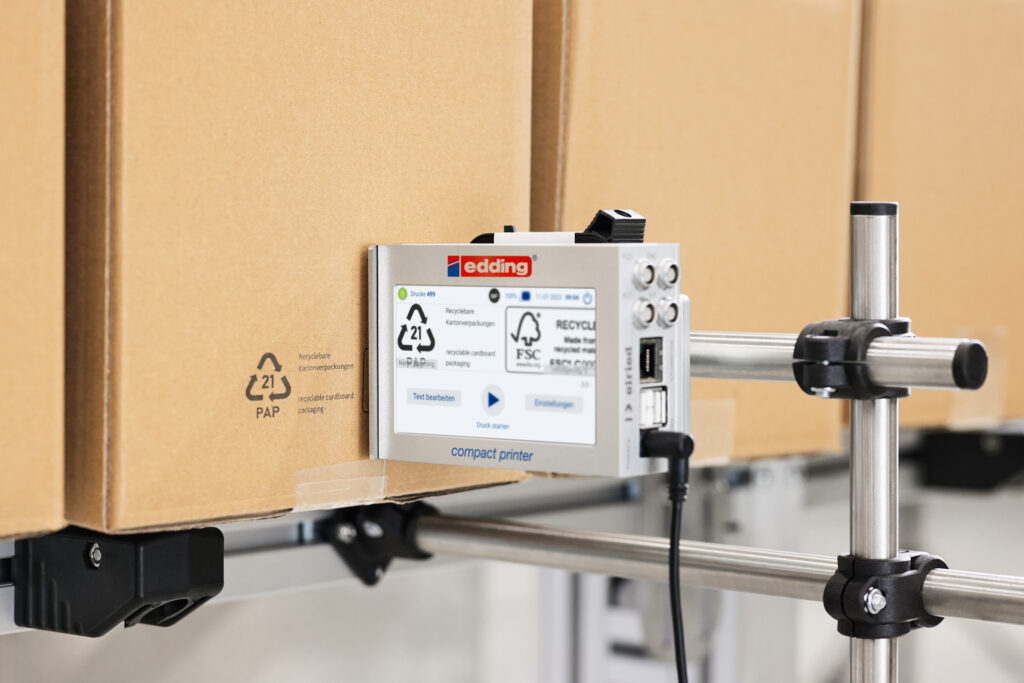
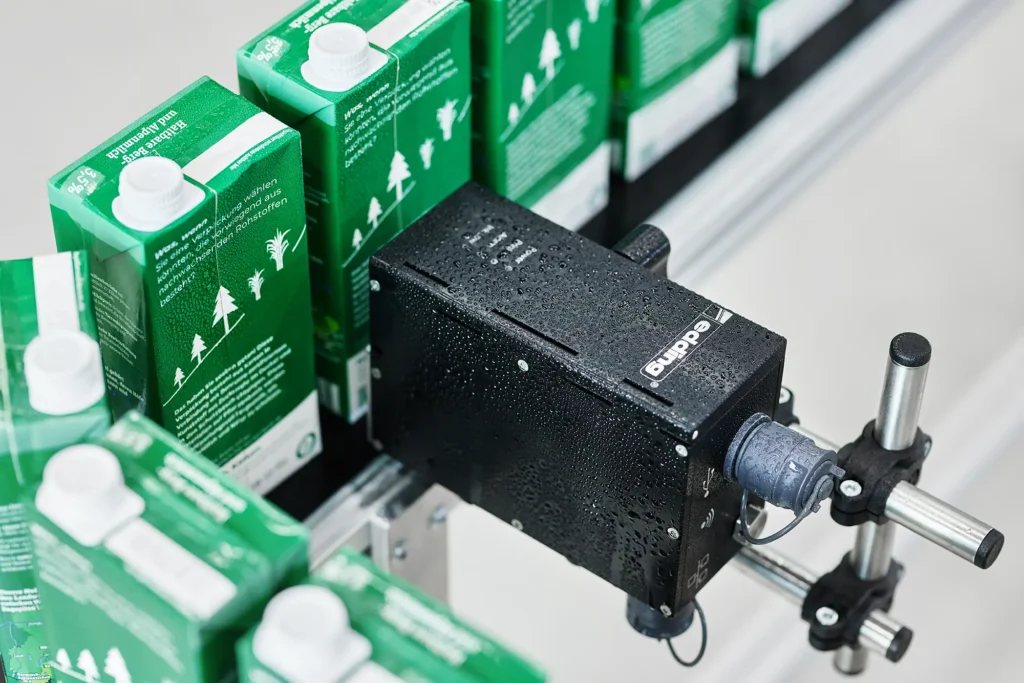
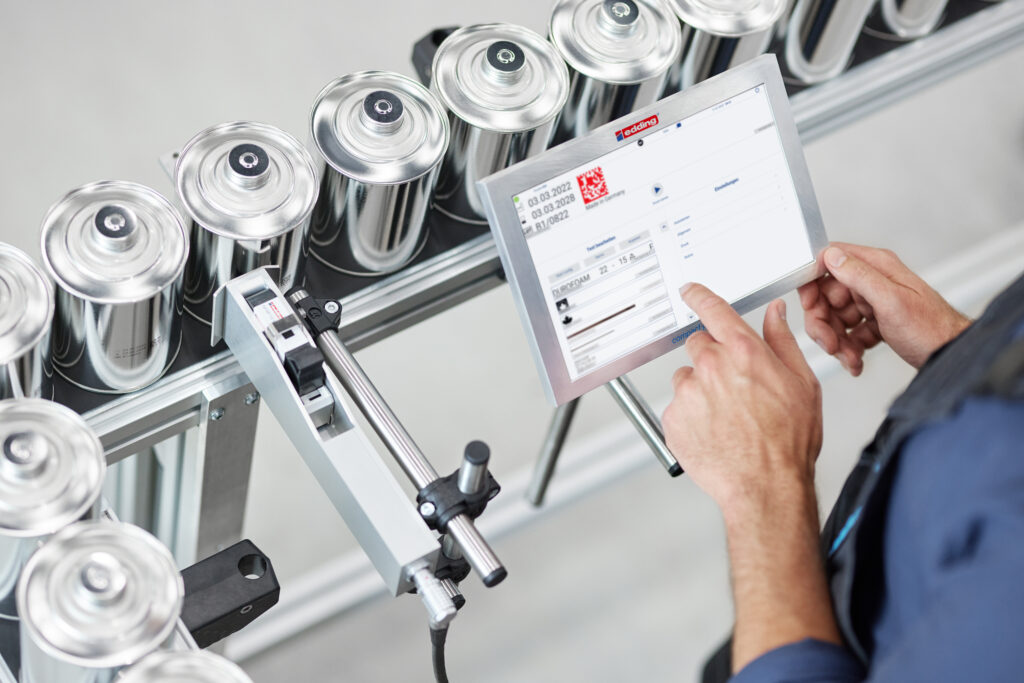
Concrete is one of the most challenging materials for industrial marking and coding due to its highly variable surface structure and material properties. Nevertheless, direct printing is essential in industries such as construction, civil engineering, precast concrete manufacturing, architecture, and energy supply. Markings such as production dates, batch numbers, QR codes, logos, and manufacturer information are used for product identification, traceability, and branding. Marking concrete places high demands on both printing technology and ink. Porous and uneven surfaces can cause inks to spread or penetrate the material. In addition, residual moisture, UV exposure, weather conditions, and abrasion can negatively affect adhesion and durability. Robust printing systems and specially formulated inks are therefore required to ensure long-lasting, legible markings. The edding compact printers provide a powerful solution, enabling variable data, barcodes, and high-resolution markings to be applied directly to concrete surfaces. Fast-drying, moisture-resistant, UV-resistant, and weatherproof inks ensure durable, high-quality print results, even under demanding conditions.
How high-resolution and durable printing on concrete works
In addition to traditional stencil printing, Drop-on-Demand (DoD) technology and Thermal Inkjet (TIJ) technology are primarily used for printing on concrete. Both methods are suitable for industrial marking applications, but they differ significantly in terms of print quality, maintenance requirements, and cost efficiency. DoD technology is often used for large-area markings but reaches its limits when high-resolution print quality is required. TIJ technology, on the other hand, enables significantly higher print resolution and is ideally suited for detailed markings such as QR codes, barcodes, logos, or variable data on concrete surfaces.
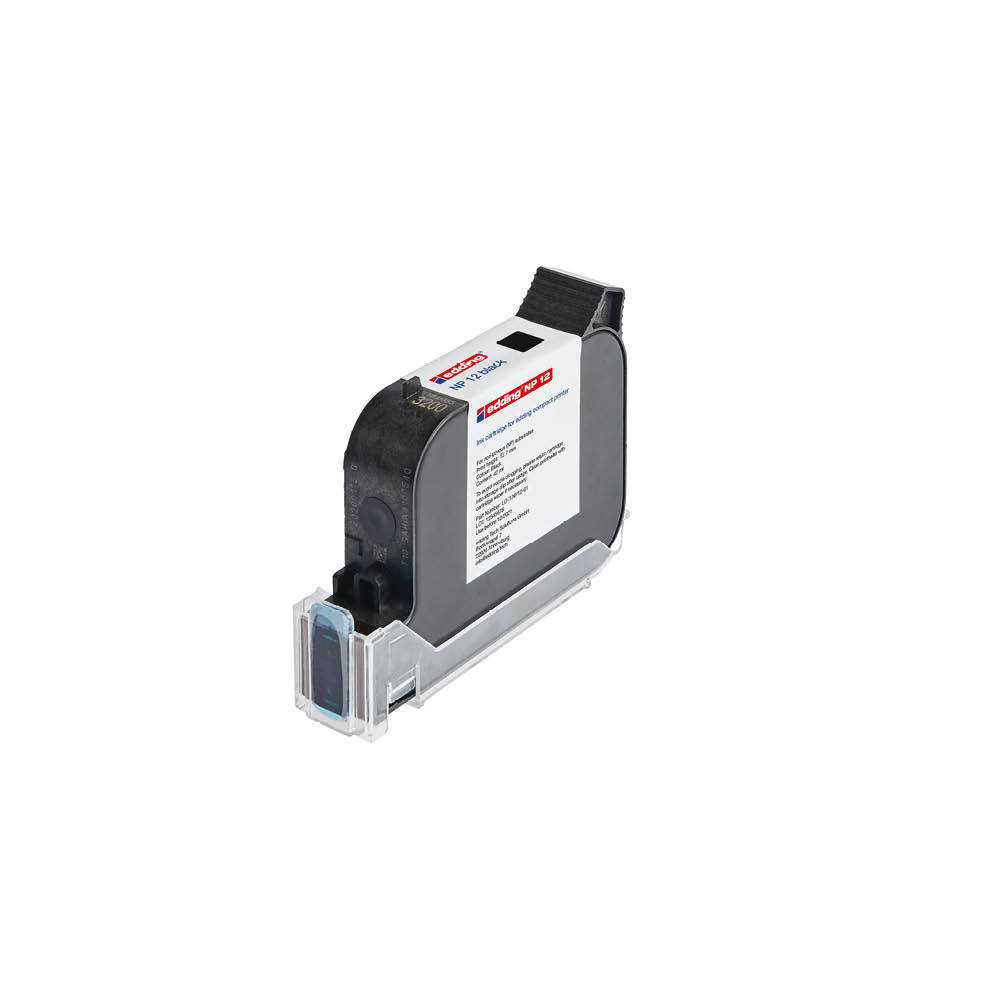
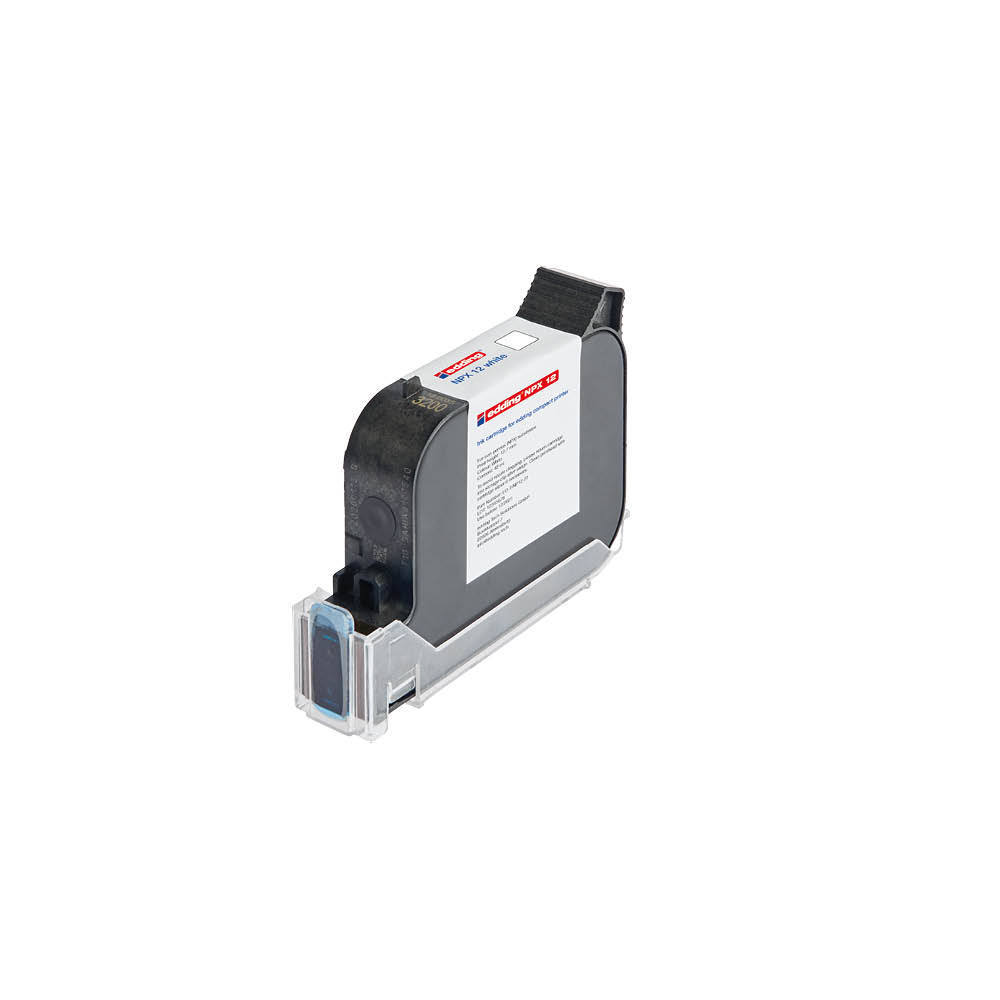
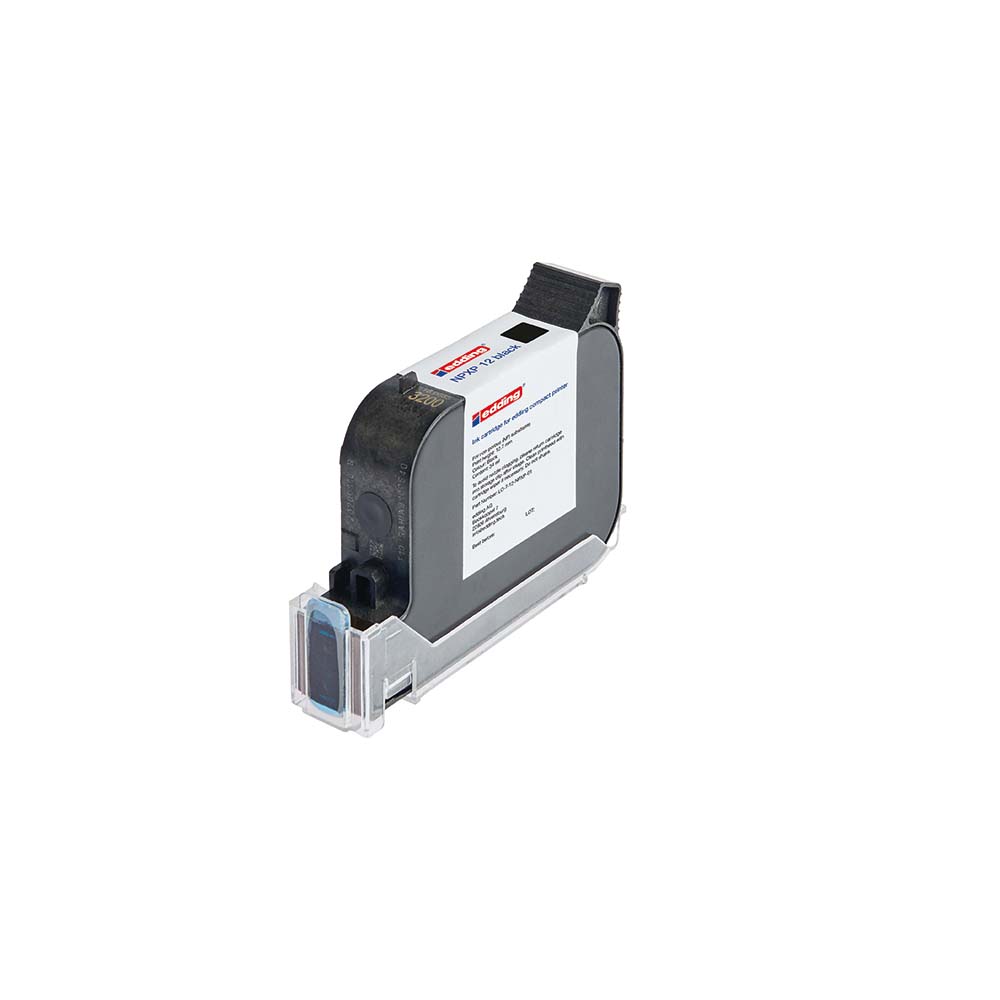
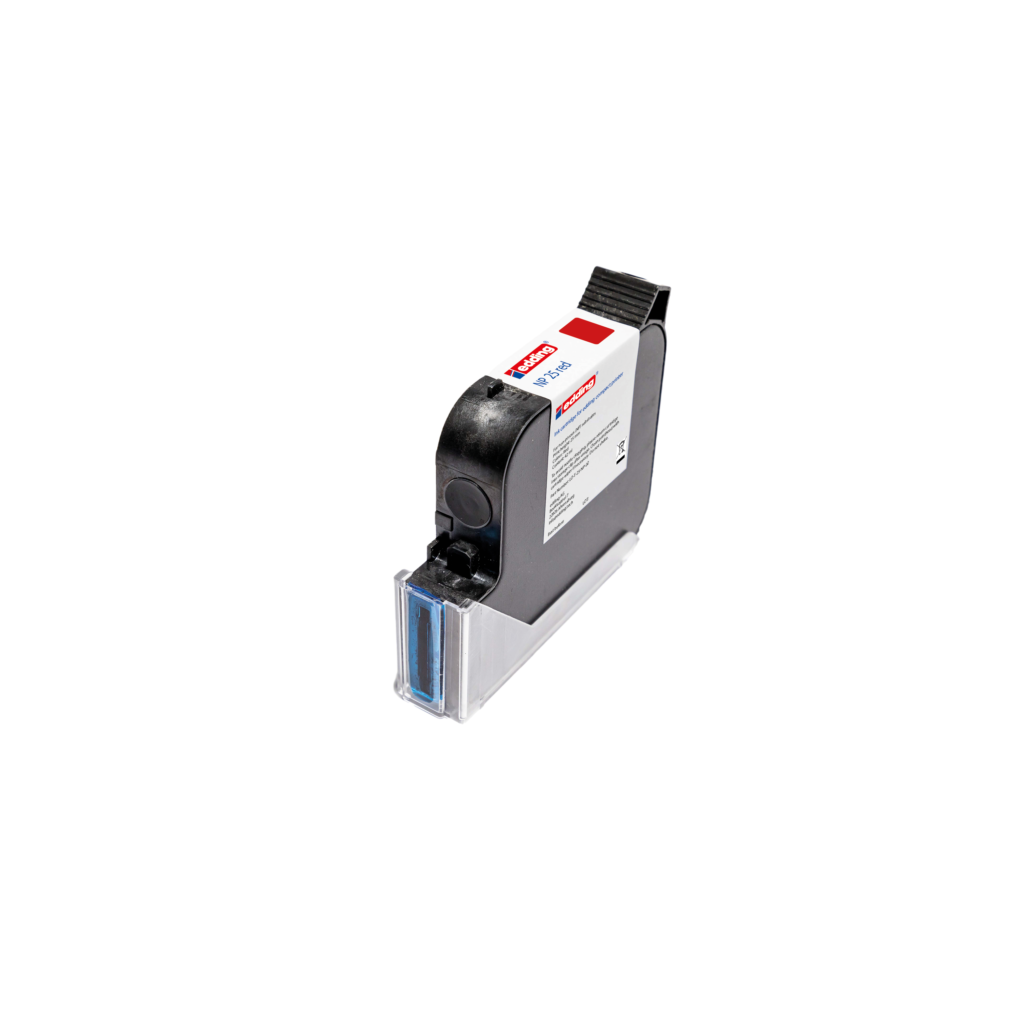
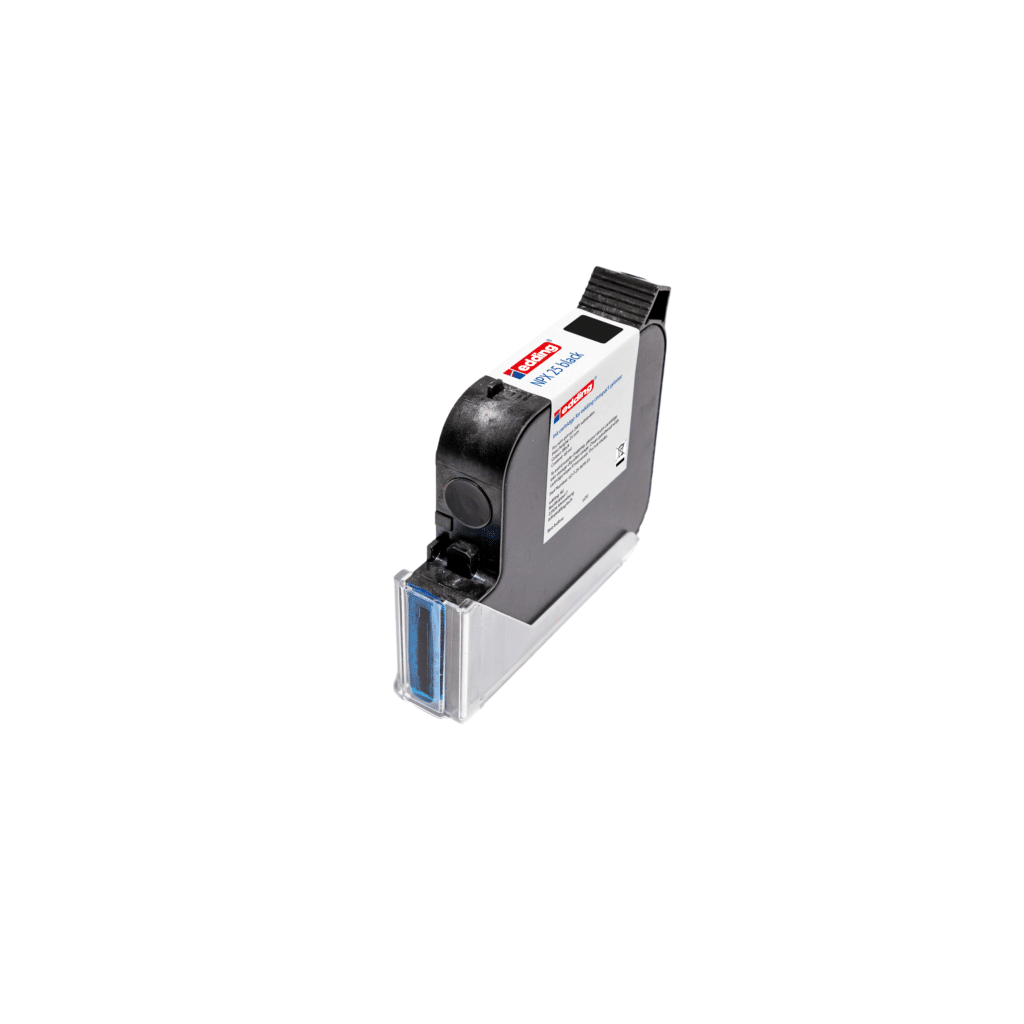
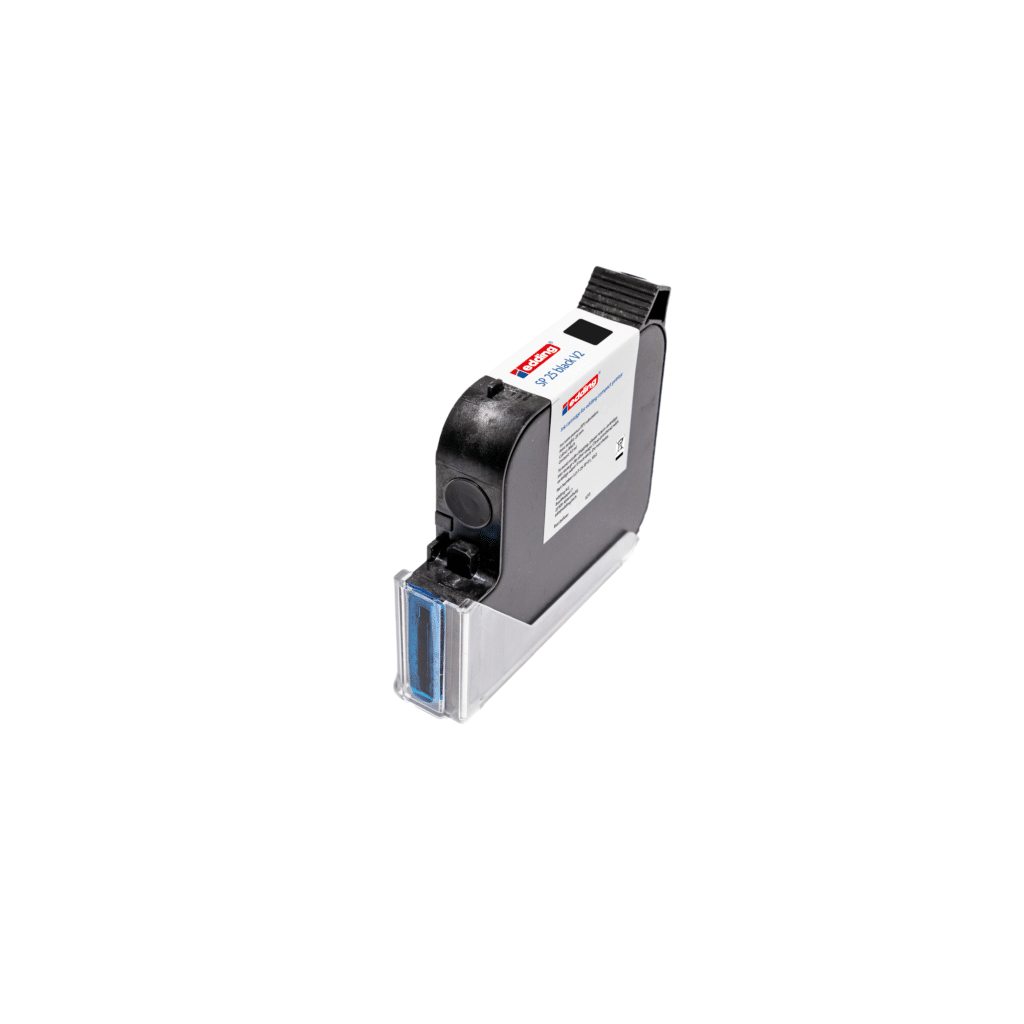
One major advantage of the edding compact printers is their simple and efficient ink handling. Thanks to the integrated cartridge system, the printers operate emission- free and virtually maintenance-free. Damaged printheads can be replaced quickly, whereas repairs on conventional DoD systems are often considerably more complex and expensive. As a result, TIJ technology offers advantages not only in print quality but also in operating costs and maintenance effort.
For permanently legible markings, selecting the right ink is equally crucial. The specially developed inks from edding dry quickly, are waterproof, and highly resistant to demanding environmental conditions. Combined with a wide range of available colors, the edding compact printer systems provide a flexible and efficient solution for a wide variety of marking and coding processes.


