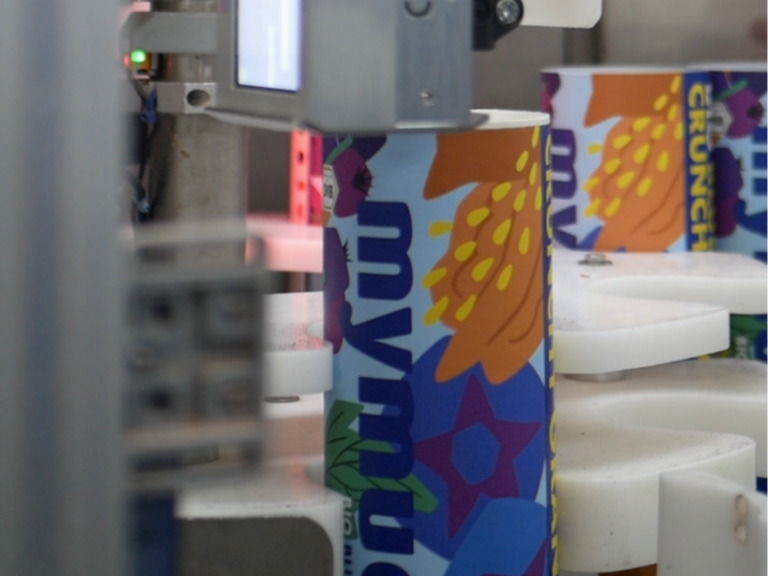
In modern production environments, companies face a clear challenge: processes must become faster, more efficient, and at the same time maintain high quality. In industrial marking, it is not only the pure printing speed that matters, but also the ink drying time and the resulting process steps.
Wet-on-wet printing addresses exactly this point. This process makes it possible to print directly onto ink that has not yet dried – opening entirely new possibilities for product and packaging coding.
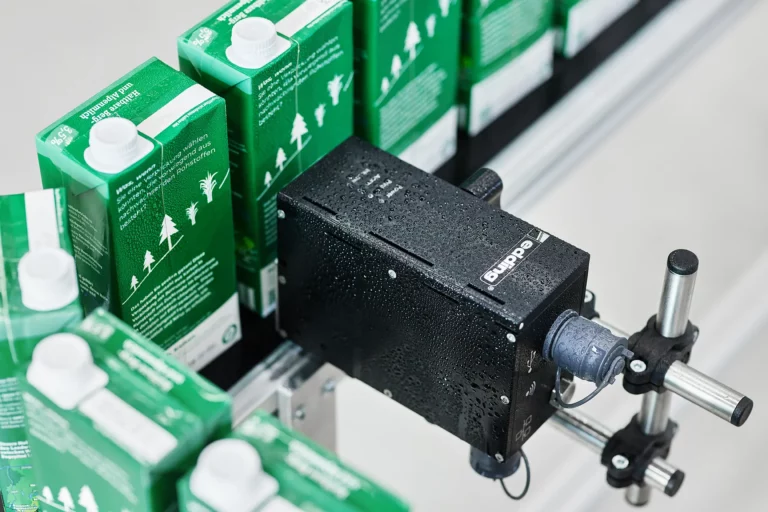
In the following, you will learn how the process works, what strengths and challenges it brings, and why it represents a future-proof solution, especially in combination with modern printing systems such as the edding compact printer series.
What is wet-on-wet printing?
Wet-on-wet printing is a special printing process in which two inks are applied directly one after the other – without the first ink needing to be completely dry beforehand.
How wet-on-wet printing works
In practical terms, this means: a first layer of ink is printed onto a surface. Immediately afterward, a second ink is applied onto the still-wet first layer. Both inks interact within a very short time window. This approach is particularly relevant in production environments where no delays are allowed. In many industrial applications, it is simply not possible to include a full drying phase between two printing steps. Depending on the material and ink, this drying time can be around 4 to 5 seconds. This is exactly where wet-on-wet printing provides a decisive advantage.
Why is this process so relevant?
Wet-on-wet printing significantly reduces overall process time. Since two printing steps are effectively combined into one, the marking process can be nearly halved. At the same time, it creates an effect that is unusual in traditional industrial marking: a form of multi-colour printing.
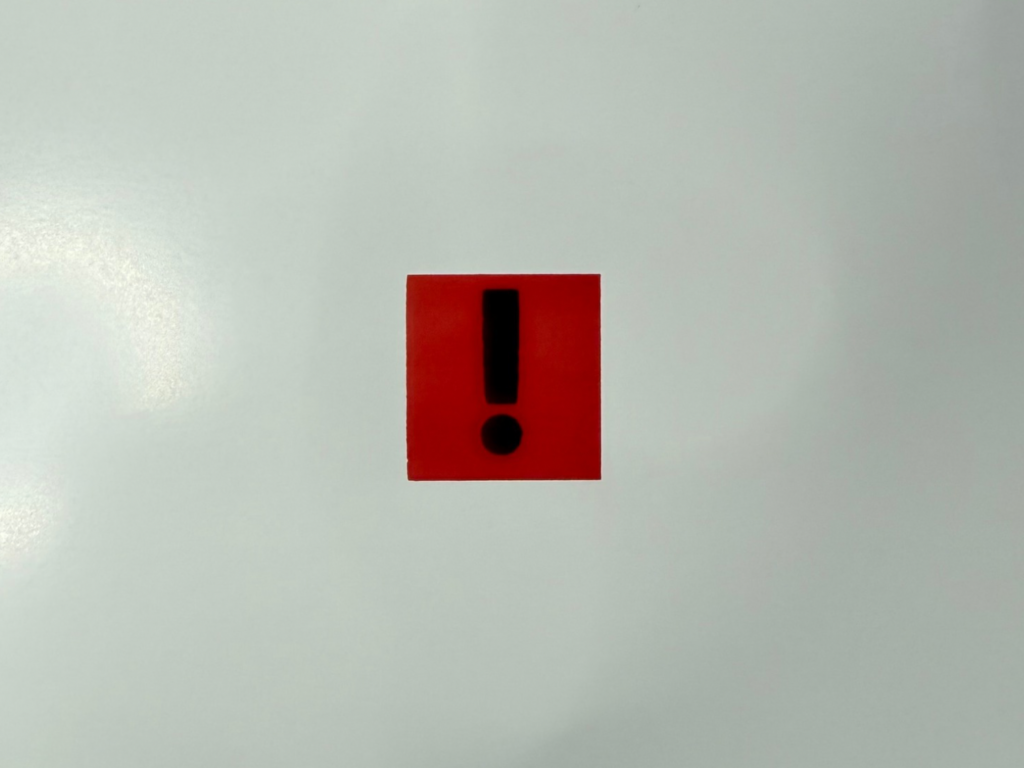
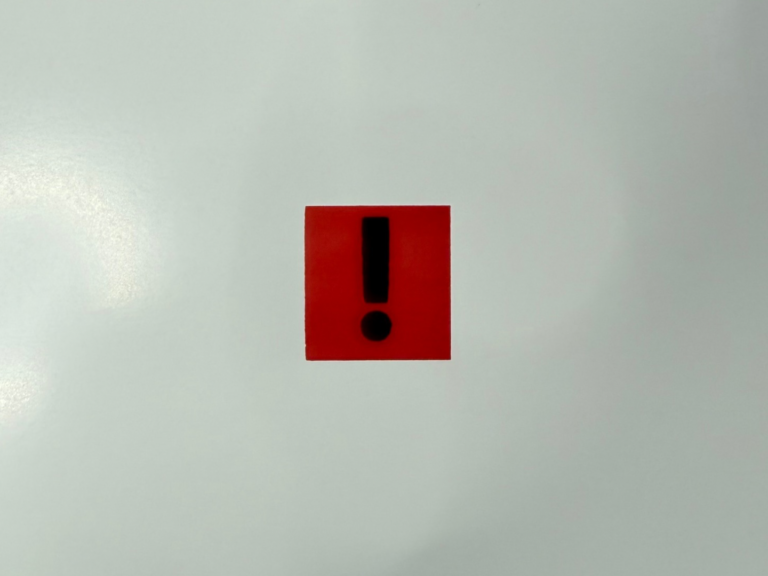
While industrial marking is typically limited to a single ink colour, wet-on-wet printing enables the combination of multiple colours without additional process steps – for example in hazard labeling.
Advantages and key features of wet-on-wet printing
The key strength of wet-on-wet printing lies in the combination of efficiency and expanded application possibilities. By directly layering inks, it enables results that are difficult or impossible to achieve with conventional methods.
Increased efficiency in the production process
A major advantage is time savings. Since no drying time is required between printing steps, the entire process becomes significantly faster. In high-speed production lines, this can make a substantial difference.
Typical effects in practice:
Reduction of process steps
Higher line speed
Reduced downtime
Multi-colour printing in industrial marking
Another benefit is the ability to implement multi-colour marking. In industrial practice, this has been rare due to the additional effort required for extra colours. With wet-on-wet printing, however, targeted colour combinations can be achieved, such as:
Black and red for hazard labeling
White on black for improved readability
Custom colour combinations for specific applications
Improved code quality and readability
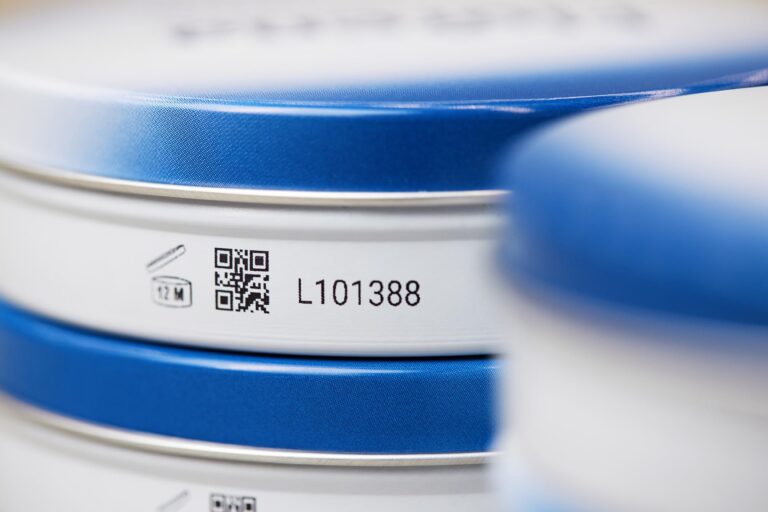
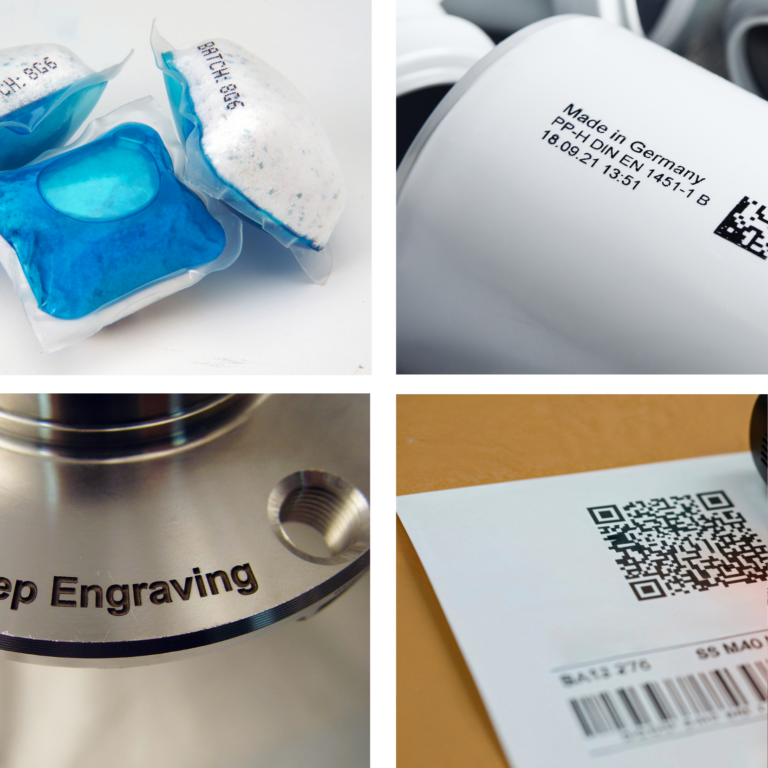
Another key aspect is code quality. Especially for 1D and 2D codes, the targeted use of two inks can significantly improve results.
The outcome:
Higher contrast
Sharper edges in markings
Significantly improved readability
This directly improves verification system performance and increases process reliability.
Expanded options for marking and design
Finally, wet-on-wet printing also opens new possibilities in marketing and product design. Packaging can combine functional markings and visual elements without requiring additional printing systems.
The challenge: two inks, one perfect print image
As convincing as the advantages are, wet-on-wet printing places high demands on the materials used. The biggest challenge lies in the behaviour of the inks.
Why is ink behaviour critical?
When a second ink is applied onto a still-wet first layer, there is a risk that both colours may mix and “bleed.” This can result in blurred contours, reduced contrast, and poor code readability. This is exactly the technical challenge of the process – and at the same time its defining feature. Only when this behaviour is precisely controlled can wet-on-wet printing be used reliably.
The solution: specially developed inks
To overcome this challenge, special inks were developed in cooperation with edding, precisely tailored to the requirements of wet-on-wet printing.
Properties of the inks used
These inks are designed to maintain their shape when overprinted and prevent uncontrolled spreading. At the same time, they offer high opacity and strong adhesion on a wide range of materials.
Proven ink combinations
In practice, pigmented inks have proven to be an ideal base. In combination with the proven NPXP black ink, stable and high-contrast print images can be achieved.
It is important to note that there is no single fixed combination. Instead, the process enables a wide range of variants. In addition to standard applications, custom colour combinations are also possible – such as blue on white or white on dark substrates. The choice depends on the specific application and print requirements.
The right technology: edding compact printer series
In addition to ink, the printing system itself plays a decisive role in the success of wet- on-wet printing. Only when both components are perfectly aligned can the full potential of the process be realized.
The edding compact printer series provides the ideal foundation. Through precise control of ink application and exact synchronization of printing timing, it ensures that both inks interact in the correct way.
In practice, this means consistently high print quality – even at high speeds and in demanding applications. At the same time, the compact design allows easy integration into existing production lines, which is a major advantage for companies with limited space.
Industries and applications: where is wet-on-wet printing used?
Wet-on-wet printing is not a niche technology but is used across a wide range of industries.
Focus: Secondary Packaging
It is especially common in secondary packaging, such as marking cartons, corrugated boxes, or shipping packaging.
Use in primary packaging
The process also plays a role in primary packaging. A typical example is printing a 2D code on a plastic bottle, where a light background is first applied, followed by the actual code. The result is optimal contrast and significantly improved readability.
Wet-on-wet print on metall:
Wet-on-wet print on foil:
Cross-industry applications
Across industries, many sectors benefit from wet-on-wet printing:
Automotive industry
Chemical industry
Export packaging
Beverage industry
Wood and construction materials industry
Consumer goods and food industry
Mechanical engineering
Furniture industry
Security & defense
Steel industry
And many more
This broad applicability demonstrates that it is an extremely flexible technology that can be adapted to a wide variety of requirements.
Conclusion: a process with strong future potential
Wet-on-wet printing represents a significant advancement in industrial marking. By combining time savings, improved print quality, and expanded design possibilities, the process offers clear advantages over traditional approaches.
Key benefits at a glance:
Reduced process time
Multi-colour printing in a single step
Improved code quality
Expanded application possibilities
At the same time, successful implementation strongly depends on the precise coordination between ink and printing system. Specially developed inks and high-performance systems such as the edding compact printer series form the basis for stable and reproducible results. For companies looking to optimize their marking processes while unlocking new possibilities, wet-on-wet printing is therefore a highly attractive option.
The demands placed on labeling systems in medium-sized businesses are constantly increasing. Legal requirements, rising raw material
Shopping Cart
You are currently viewing a placeholder content from Doo-Finder. To access the actual content, click the button below. Please note that doing so will share data with third-party providers.
You are currently viewing a placeholder content from Vimeo. To access the actual content, click the button below. Please note that doing so will share data with third-party providers.
You are currently viewing a placeholder content from YouTube. To access the actual content, click the button below. Please note that doing so will share data with third-party providers.
You are currently viewing a placeholder content from Google Maps. To access the actual content, click the button below. Please note that doing so will share data with third-party providers.
You are currently viewing a placeholder content from Google Maps. To access the actual content, click the button below. Please note that doing so will share data with third-party providers.
You are currently viewing a placeholder content from Mapbox. To access the actual content, click the button below. Please note that doing so will share data with third-party providers.
You are currently viewing a placeholder content from OpenStreetMap. To access the actual content, click the button below. Please note that doing so will share data with third-party providers.