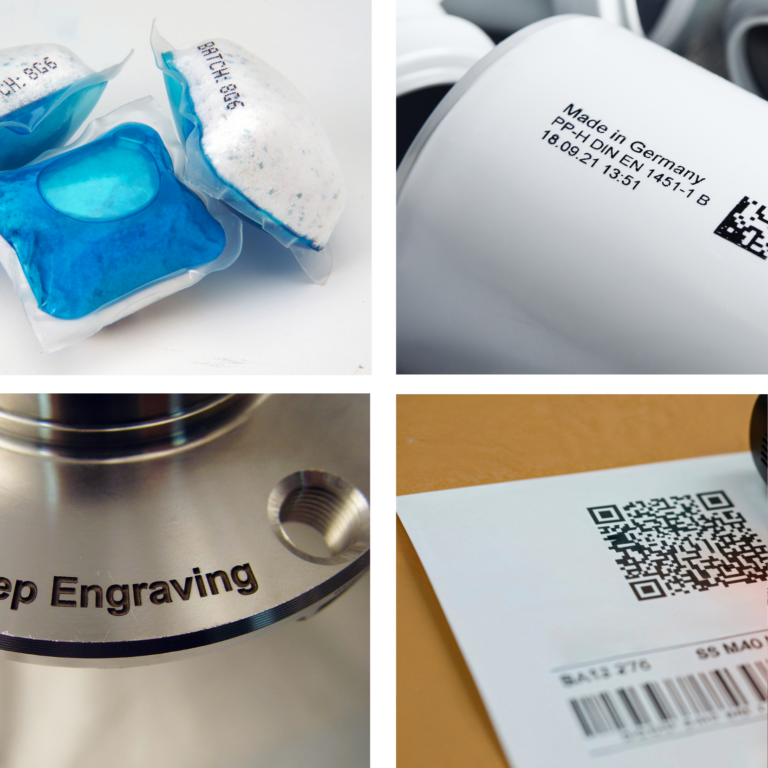
The demands placed on labeling systems in medium-sized businesses are constantly increasing. Legal requirements, rising raw material prices, smaller batch sizes, and growing competitive pressure are forcing manufacturing companies to make their labeling processes economical and flexible.
At the same time, budgets are often limited. Investments must pay for themselves quickly. Maintenance costs and downtime have a direct impact on production costs.
But which printing technology really makes sense for medium-sized companies? Continuous inkjet (CIJ), thermal inkjet (TIJ), laser, or classic labelers?
This article provides a structured overview of marking systems for medium-sized companies, their cost structure, advantages, and disadvantages – and tells you which solution has proven particularly effective in practice.
Why labeling systems must be evaluated differently in medium-sized enterprises
Large corporations often invest in highly complex systems with extensive service contracts. Small and medium-sized businesses, on the other hand, need:
Cost-effective investment costs
Ease of use
Low maintenance requirements
Flexible adaptation to product changes
Rapid integration into existing lines
Predictable operating costs
The total cost of ownership (TCO) – i.e., the total costs over the lifetime of a system – is particularly relevant here.
Overview: Which labeling systems are available?
1. Continious Inkjet (CIJ)
How it works:
A continuous ink jet is electrostatically deflected and applied to the product.
Advantages:
Very high speed
Suitable for many materials
Proven in large-scale production
Disadvantages for medium-sized businesses:
High maintenance costs
Solvents and consumables
Regular cleaning required
Complex operation
Higher total cost of ownership
CIJ is often oversized for companies with moderate production volumes.
2. Thermal Inkjet (TIJ)
How it works:
Microscopic ink droplets are precisely applied to the material using heat pulses.
Advantages:
Very low maintenance
No complex ink management
Compact design
High print quality
Ideal for cardboard, paper, and porous surfaces
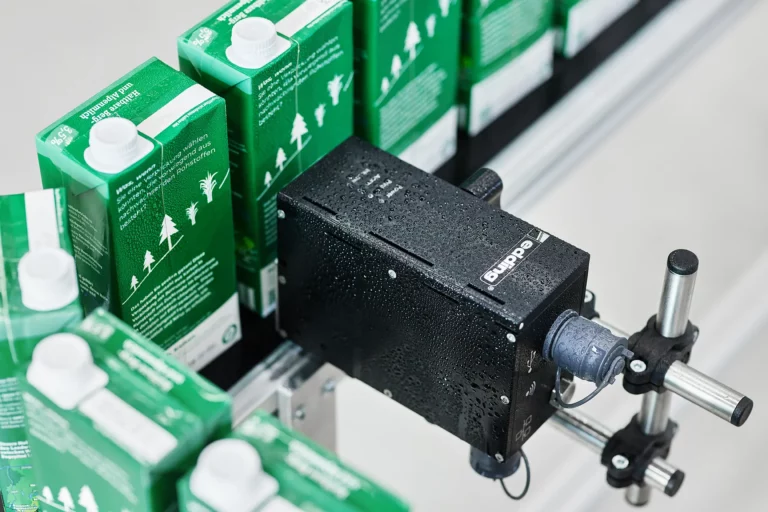
TIJ offers decisive advantages, especially for marking systems in medium-sized businesses: low entry costs, easy integration, and calculable operating costs.
This is where edding compact printers show their strengths. They have been specially developed for flexible production environments and are ideal for:
Outer cartons
Folding boxes
Secondary packaging
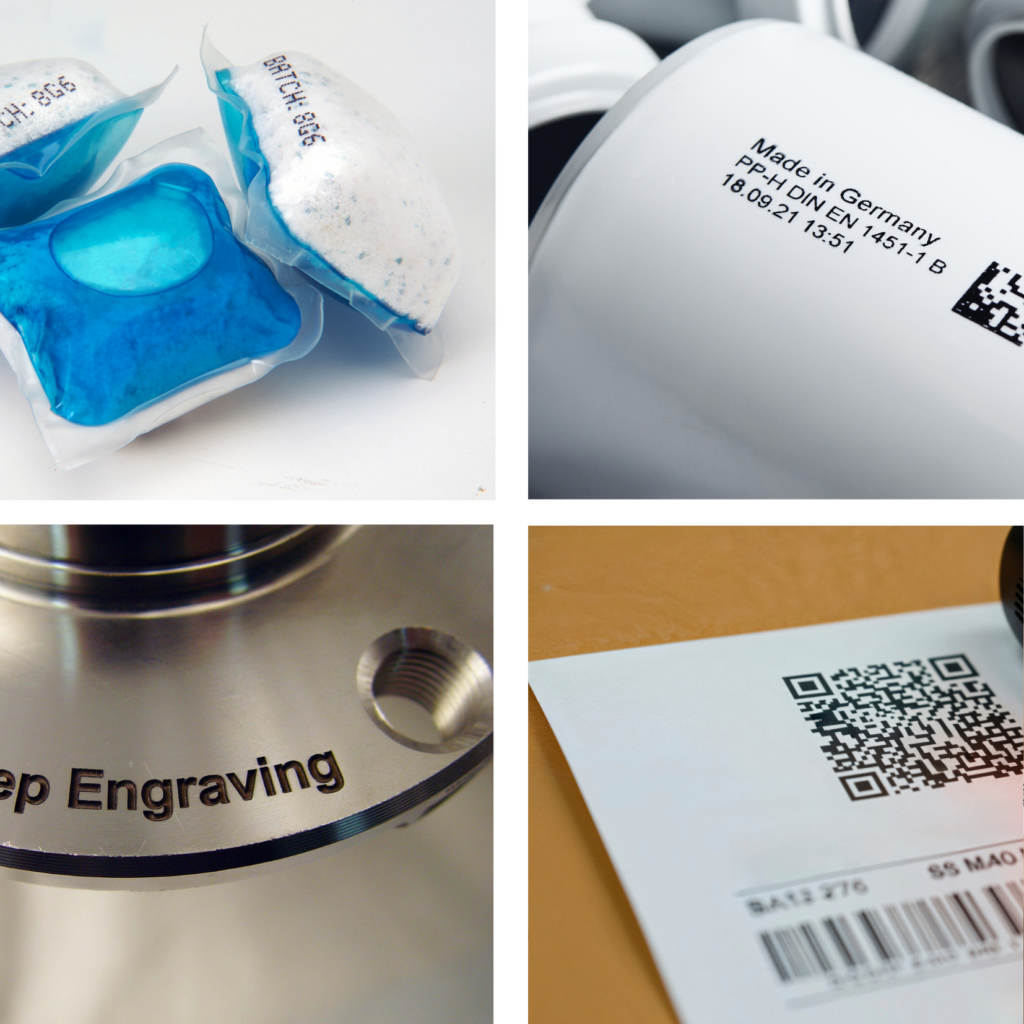
Variable data
3. Laser systems
Advantages:
No consumables
Permanent marking
High speed
Challenges for medium-sized businesses:
High investment costs
Safety requirements
Limited material variety
Technical complexity
Laser marking is particularly worthwhile for very high quantities and standardized products.
4. Labeler
Advantages:
Flexible for design changes
Also suitable for complex layouts
Typical disadvantages:
High material costs (labels)
Storage
Roll changes
Prone to errors
Mechanical wear
Direct printing is becoming increasingly economical, especially with rising raw material prices.
Economic comparison for medium-sized companies
criterion
CIJ
TIJ
Laser systems
Labeler
investment
medium
Low – medium
very High
medium
maintenance
High
very Low
medium
medium – High
consumables
High
Calculable
No ink consumption
very High
usability
complex
Easy
Technically challenging
mechanically complex
flexibility
High
very High
Low
medium
For many production environments in small and medium-sized businesses, it is clear that thermal inkjet offers the best balance between investment, operating costs, and flexibility.
Typical use cases in small and medium-sized businesses
1. Beverage and food industry
Best-before date printing on outer cartons and tray packaging
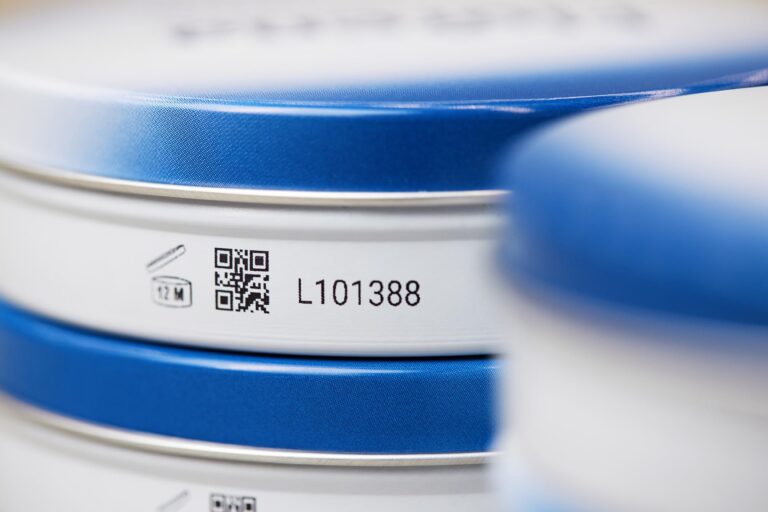
Batch numbers for traceability in accordance with HACCP
Promotional codes and competition codes for promotions
Production date and time printed directly on folding cartons
Line and system identification for internal quality assurance
EAN and GS1-compliant barcodes on secondary packaging
2. Industrial and consumer goods
Serial numbers for devices and assemblies
QR codes with links to digital product passports or service portals
Packaging labeling with item numbers and variant information
Production and manufacturing data for internal traceability
CE and conformity markings on outer packaging
Batch numbers for technical consumables
3. E-commerce, logistics, and export packaging Shipping cartons with customer-specific order numbers
Versandkartons mit kundenspezifischen Bestellnummern
This offers considerable economic advantages, especially for small and medium production volumes.
Total cost of ownership: The decisive factor
Many companies initially only consider the acquisition costs. However, the following factors are crucial:
Maintenance intervals
Spare parts
Downtime
Consumables
Training costs
A low-maintenance TIJ system is usually significantly cheaper over several years than a supposedly inexpensive CIJ printer with high follow-up costs.
Decision-making guide for small and medium-sized enterprises
Ask yourself the following questions:
What materials will be printed?
How high are your production volumes?
How often does print data change?
How important is maintenance-free operation?
What is a realistic investment amount?
For many medium-sized companies, this results in a clear trend toward compact, flexible inkjet solutions.
Conclusion: Labeling systems for small and medium-sized businesses – cost-effectiveness is the deciding factor
Choosing the right marking system is a strategic decision. While CIJ and laser are justified in large-scale production, medium-sized companies primarily need:
Predictable costs
Low maintenance
Flexible adaptability
Easy operation
Thermal inkjet – especially in the form of compact, industrial-grade systems – offers a compelling overall package.
If you want to make your marking processes economical in the long term, you should therefore consider not only the acquisition costs, but also the overall operating concept.
Would you like to find out which marking system makes economic sense for your company? Get individual advice and see how modern compact printing systems can make your production processes more efficient.
The demands placed on labeling systems in medium-sized businesses are constantly increasing. Legal requirements, rising raw material
Shopping Cart
You are currently viewing a placeholder content from Doo-Finder. To access the actual content, click the button below. Please note that doing so will share data with third-party providers.
You are currently viewing a placeholder content from Vimeo. To access the actual content, click the button below. Please note that doing so will share data with third-party providers.
You are currently viewing a placeholder content from YouTube. To access the actual content, click the button below. Please note that doing so will share data with third-party providers.
You are currently viewing a placeholder content from Google Maps. To access the actual content, click the button below. Please note that doing so will share data with third-party providers.
You are currently viewing a placeholder content from Google Maps. To access the actual content, click the button below. Please note that doing so will share data with third-party providers.
You are currently viewing a placeholder content from Mapbox. To access the actual content, click the button below. Please note that doing so will share data with third-party providers.
You are currently viewing a placeholder content from OpenStreetMap. To access the actual content, click the button below. Please note that doing so will share data with third-party providers.