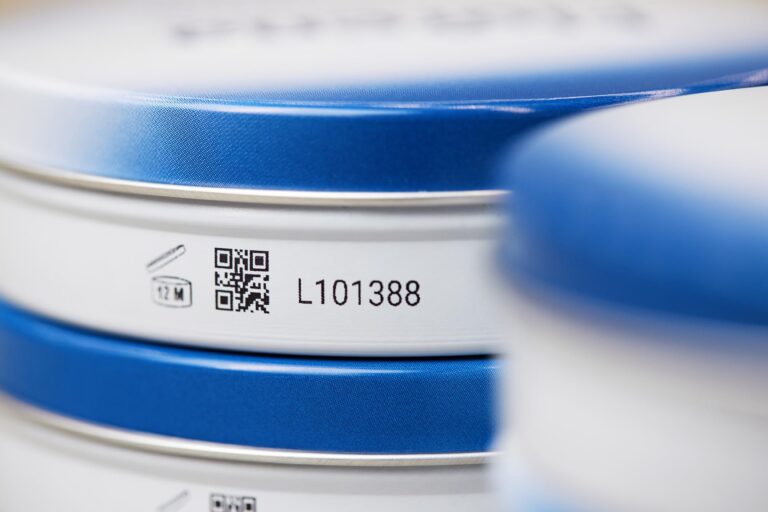
GS1 Codes Explained Simply: Structure, Meaning, and the Future of Product Identification
What GS1 actually is GS1 is a global, non-profit standardization organization headquartered in Brussels, with national offices



GS1 is a global, non-profit standardization organization headquartered in Brussels, with national offices in numerous countries worldwide. In Germany, this role is fulfilled by GS1 Germany. The organization manages international standards for the unique identification of products, logistics units, locations, and business relationships. Companies that require barcodes for retail products receive their numbering ranges through GS1. These standards form the foundation for globally unique and consistent product identification throughout the entire supply chain.
The basic principle behind every GS1 number is a globally unique dataset. In the case of the GTIN-13 – commonly still referred to as the “EAN” code – the number begins with a country prefix. For Germany, these prefixes range from 400 to 440. This is followed by the company ID, the item number, and a check digit. In total, the number consists of 13 digits, for example: 4012345678901.
The system becomes particularly interesting with more advanced codes such as GS1-128 or GS1 DataMatrix. Here, GS1 uses so-called Application Identifiers (AI). These are small numeric prefixes in brackets that define which type of information follows.
A typical code printed on a food product could look like this:
(01)04012345678901(10)L24050A(17)260530
This code contains the GTIN, batch number L24050A, and the best-before date 30 May 2026.
EAN-13 is the classic narrow barcode found on almost every supermarket product. GS1-128 is significantly longer and is mainly used on shipping cartons, outer packaging, and pallets. GS1 DataMatrix, on the other hand, is a square-shaped 2D code. Visually, it resembles a QR code, but it is more compact and does not feature the typical three large corner squares.
At the same time, traditional QR codes are increasingly being used in practice, often containing a so-called GS1 Digital Link. This allows digital product information to be accessed directly via smartphone.
The main driver is traceability. EU Regulation 178/2002 requires every step within the food supply chain to be traceable according to the principle of “one step up, one step down.” If a product batch must be recalled, every hour counts. This only works if batch numbers and best-before dates are clearly encoded – ideally printed directly onto the product rather than applied as a label. The second and much larger driver is Sunrise 2027. Together with international retailers such as Edeka, REWE, Carrefour, Walmart, and Lidl, GS1 is coordinating the global transition from traditional 1D barcodes to modern 2D codes. By the end of 2027, checkout systems worldwide are expected to be capable of reading GS1 DataMatrix and QR codes with GS1 Digital Link.
This represents a fundamental change for the industry. A 2D code can store not only item numbers and batch information, but also allergen details, origin, nutritional values, recycling information, and links to digital product pages. Consumers can scan the codes directly with their smartphones and access information that often no longer fits on conventional labels. At the same time, new opportunities are emerging for retailers and manufacturers. Checkout systems can automatically discount products approaching their best-before date, helping to reduce food waste. Product recalls can be handled faster and more precisely, while manufacturers can update product information digitally without having to redesign packaging or print new labels every time.
Additional pressure comes from related industries such as pharmaceuticals, where serialized codes have been mandatory since 2019, and the tobacco industry with the requirements of the TPD2 directive. The food industry is now gradually following this development – particularly for sensitive product categories such as meat, fish, and infant formula.
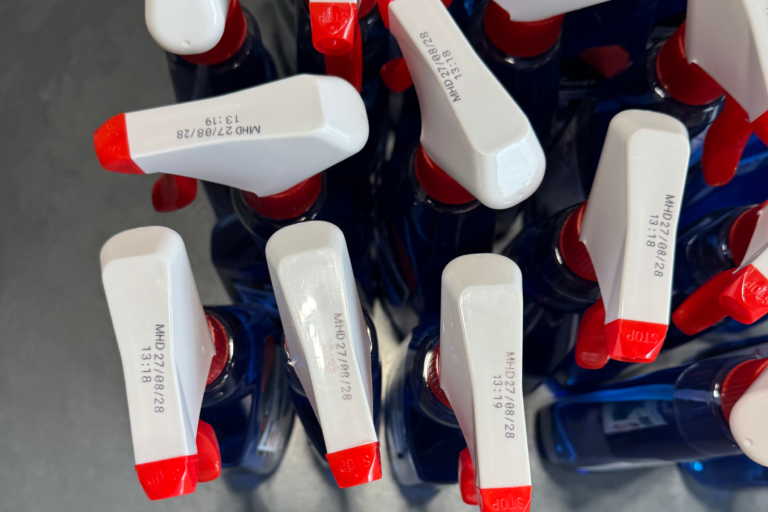
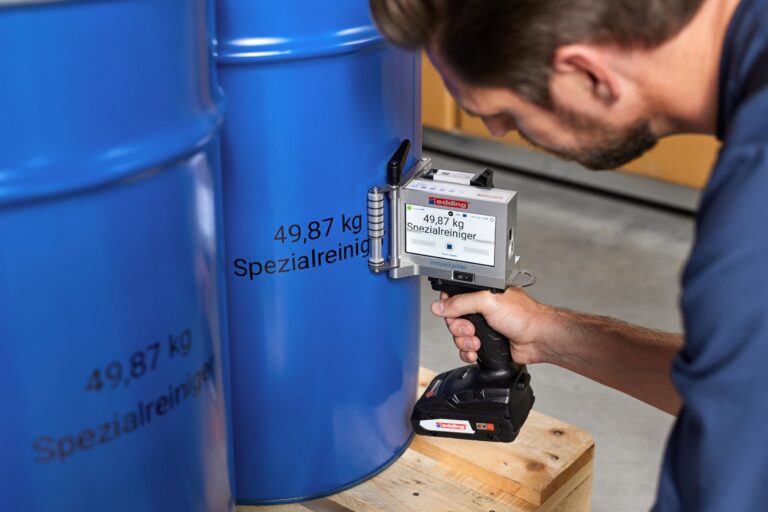
Many manufacturers are currently trying to solve two challenges at the same time: replacing labels with direct printing in order to reduce costs and material usage, while also preparing for the upcoming 2D code standard. The edding compact printer systems address both requirements. The systems print both GS1-128 and GS1 DataMatrix codes natively and at resolutions of up to 600 dpi. This ensures code quality that can be reliably read even by highly demanding scanning systems. As a result, manufacturers can already meet today’s requirements for modern traceability while preparing for future 2D code standards.
How to create a GS1 with the edding compact printer system: GS1 example

1D codes are the classic barcodes with vertical bars of varying widths. They store information in only one dimension – horizontally – and usually encode nothing more than a number, such as the GTIN. Any additional information must then be retrieved from a database or checkout system. Typical examples include EAN-13, GS1-128, and Code 128.
Within the category of 2D codes, a distinction is generally made between QR codes and DataMatrix codes.

QR-Codes: QR codes are computer-generated two-dimensional images that are primarily used by brands today to communicate with consumers — for example for competitions, promotions, or marketing campaigns. Consumers simply scan the QR code with their smartphone. The corresponding app decodes the code and performs an action, such as opening a website.

DataMatrix-Codes: DataMatrix codes are compact two-dimensional barcodes made up of small square modules. They are read by 2D imaging scanners or camera-based vision systems. Due to their high data density, they are particularly suitable for small products and packaging, especially in the food and pharmaceutical industries.
What GS1 actually is GS1 is a global, non-profit standardization organization headquartered in Brussels, with national offices
When speed and quality meet In modern production environments, companies face a clear challenge: processes must become
How mymuesli significantly reduces maintenance efforts with the edding in-line 12, avoids contamination in production, and sustainably
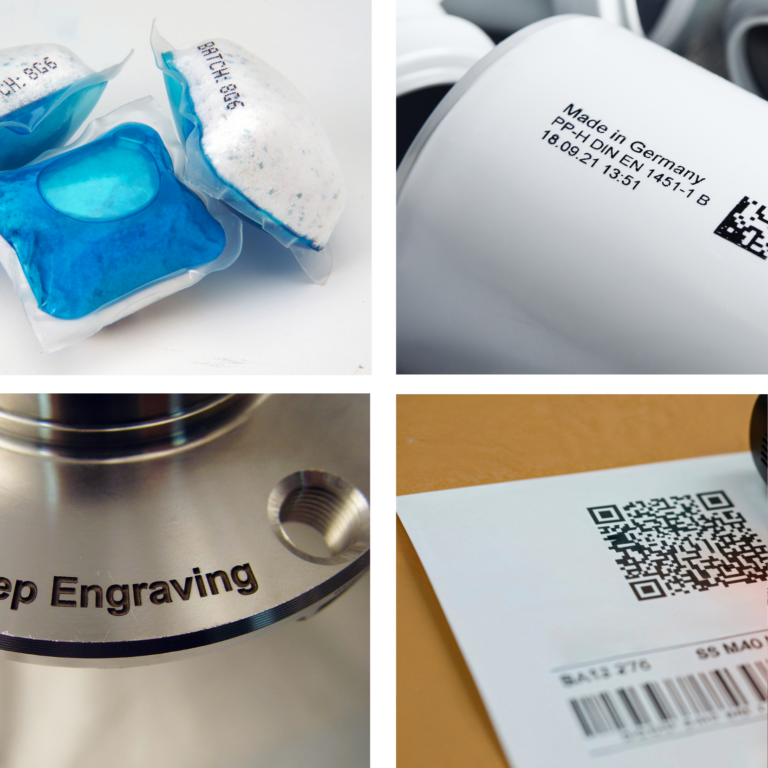
The demands placed on labeling systems in medium-sized businesses are constantly increasing. Legal requirements, rising raw material
How H. Kerndl GmbH simplifies its coding processes, avoids errors and minimizes downtime with the edding in-line
The cooperation between edding and Elried combines innovative printing systems such as the new in-line Pro IP67
You are currently viewing a placeholder content from Vimeo. To access the actual content, click the button below. Please note that doing so will share data with third-party providers.
More InformationYou are currently viewing a placeholder content from YouTube. To access the actual content, click the button below. Please note that doing so will share data with third-party providers.
More InformationYou need to load content from reCAPTCHA to submit the form. Please note that doing so will share data with third-party providers.
More InformationYou are currently viewing a placeholder content from Google Maps. To access the actual content, click the button below. Please note that doing so will share data with third-party providers.
More InformationYou are currently viewing a placeholder content from Google Maps. To access the actual content, click the button below. Please note that doing so will share data with third-party providers.
More InformationYou are currently viewing a placeholder content from Mapbox. To access the actual content, click the button below. Please note that doing so will share data with third-party providers.
More InformationYou are currently viewing a placeholder content from OpenStreetMap. To access the actual content, click the button below. Please note that doing so will share data with third-party providers.
More Information