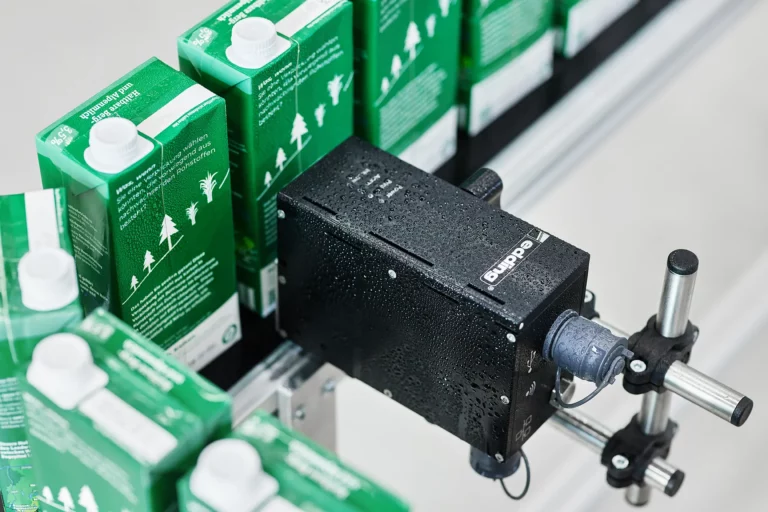
IP67 Printers for the Food Industry: Waterproof Coding in Wet Areas
In food production, moisture, condensation and regular high-pressure cleaning are part of daily operations – but for



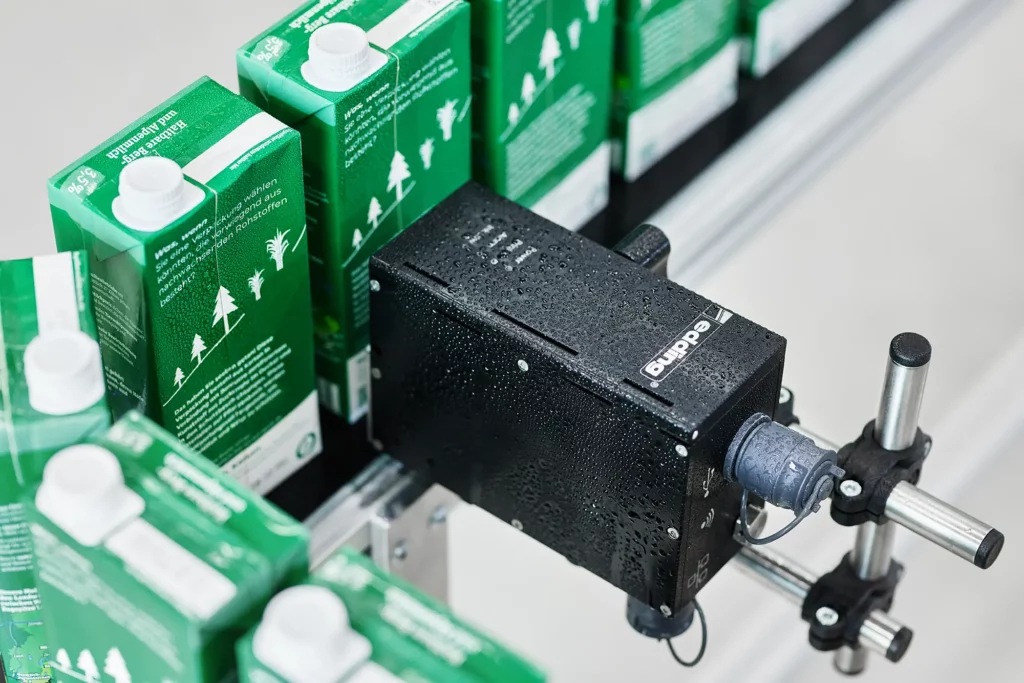
In food production, moisture, condensation and regular high-pressure cleaning are part of daily operations – but for many coding printers, they represent the biggest stress test. The edding in-line IP67 is designed exactly for these conditions: it reliably codes expiry dates, batch numbers and barcodes even where conventional coding printers reach their limits.
Whether in meat, dairy or beverage production, in bakery, fish or convenience food manufacturing: wherever food is processed, strict hygiene regulations apply. Regular cleaning of equipment – often several times a day, frequently with high-pressure cleaners – is the rule rather than the exception.
For a standard coding printer, this poses a real risk: water, cleaning agents and condensation can damage the electronics and print head. In practice, this often means printers have to be laboriously removed before every cleaning cycle and readjusted afterward – costing valuable production time and putting process reliability at risk.
This is exactly where the waterproof edding in-line IP67 comes in: it stays permanently mounted on the machine, withstands cleaning during ongoing operation, and ensures consistently reliable food coding.
In IP67, the first digit stands for complete protection against dust, the second for protection against temporary immersion up to 1 meter depth. In practical terms for the food industry, this means the edding in-line IP67 can become fully wet during high-pressure cleaning of the equipment without needing to be removed – splash water, condensation, cleaning foam or an accidental jet of water from an adjacent cleaning area are not a problem.
A coding printer itself does not need to be cleaned – it simply needs to survive unscathed while the surrounding equipment is cleaned. For this scenario, IP67 protection is entirely sufficient and, in practice, even the better choice: the edding in-line IP67 can become completely wet and even withstand immersion up to 1 meter deep – something an IP69K-certified component cannot achieve, since IP69K does not define any protection against immersion.
The result: during high-pressure cleaning of your machines, the edding in-line IP67 can simply remain mounted on the equipment and become fully wet – no need to remove it before every cleaning cycle.
An IP67 printer is suited to packaging lines wherever splash water, condensation, moisture or dust – such as flour or spices – occur. In practice, this applies especially to the following areas:
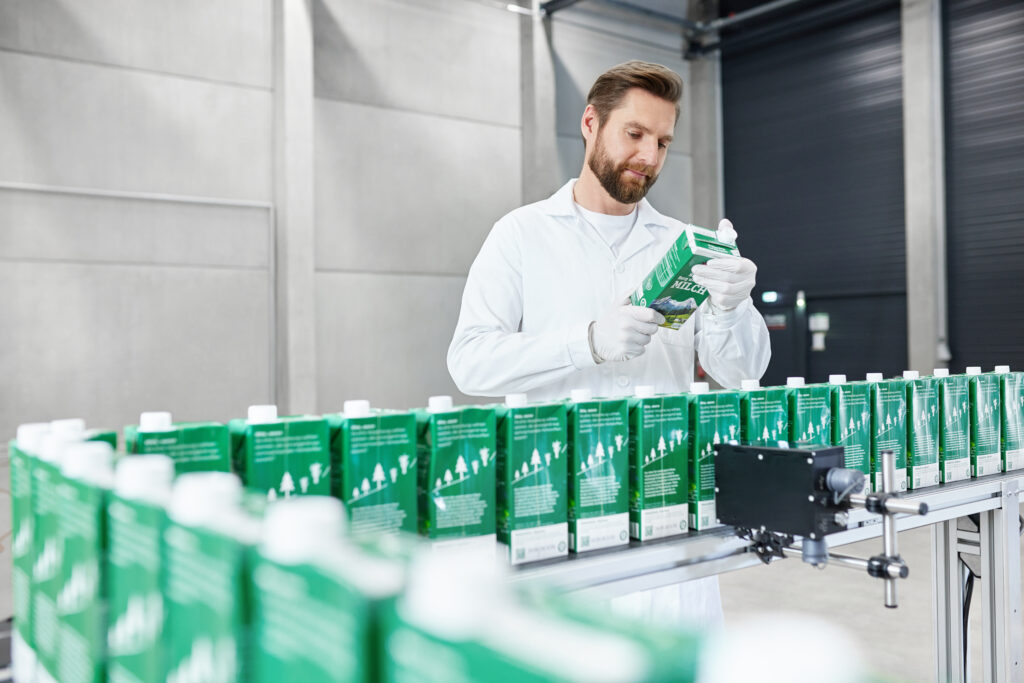
1. Coding after primary packaging: Here, the edding in-line IP67 prints best-before dates, batch numbers and barcodes – typically directly after the actual wet area (washing, filling), where residual moisture or condensation still plays a role.
2. Secondary packaging (cartons, trays): Direct printing on cartons and outer packaging generally involves less intensive cleaning than primary production, since there is no direct food contact – but protection against moisture and dust, such as flour dust in bakery production, remains an important factor for uninterrupted operation.
3. Areas with high humidity: In cooling zones of the packaging line, for example with fresh meat or dairy products, temperature differences regularly lead to condensation – a persistent condition the printer must withstand.
4. Transition zones between wet and dry areas: Residual moisture from upstream processes such as filling is often still present, even when no direct high-pressure jet reaches the printer.
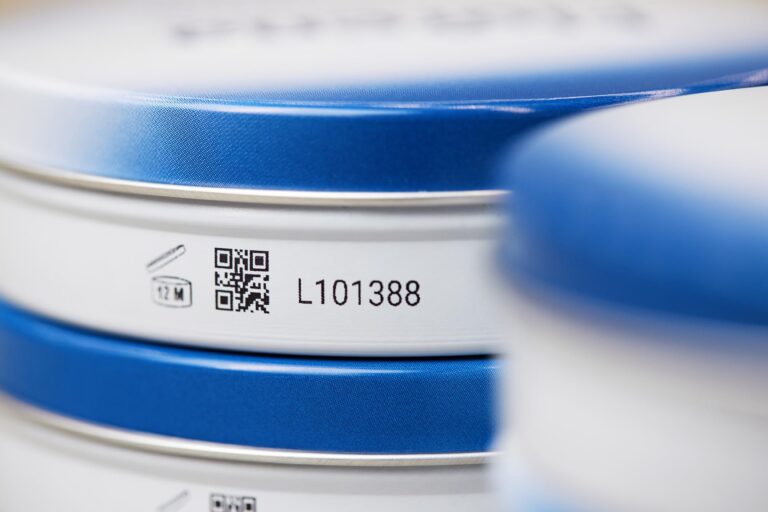
Elried’s edding in-line printers operate on the thermal inkjet (TIJ) principle. Ink is applied to the surface precisely and without contact through fine nozzles in the print head. The result: crisp, high-contrast coding of barcodes, batch numbers and expiry dates – even at high line speeds and with fine 2D codes that must be reliably read by verification systems.
This print quality is a defining feature of the edding in-line printers. Since the edding in-line IP67 simply adds external protection, the actual print mechanism remains unchanged, so sharpness and contrast are identical to the unprotected system. As a thermal inkjet printer for food and a printer for expiry dates on damp packaging, it delivers exactly the combination that matters in practice: high-quality print output combined with resistance to moisture and cleaning processes in a single system.
The edding in-line IP67 is the compact answer to high moisture and cleaning demands in production. At its core is a carefully designed housing concept that consistently shields the electronics and print head from dust and water: the printer withstands high-pressure cleaning during ongoing operation and would even survive brief immersion up to 1 meter deep unscathed.
There is no need to compromise on ink selection: the system uses the entire edding ink portfolio, delivering a precise, high-contrast print image on virtually any surface – from film to cardboard to plastic.
For those who need maximum print speed and configuration freedom alongside moisture protection, the edding in-line Pro IP67 is the right choice. The system prints at up to 600 dpi resolution, serves up to four production lanes in parallel, and reaches print rates of up to 78 prints per second – built for continuous use on high-speed lines. Combined with the fully sealed IP67 housing, this results in a printer specifically tailored to the strict cleaning requirements of the food industry: it stays mounted on the equipment during high-pressure cleaning instead of having to be removed beforehand.
The edding in-line Pro IP67 stands out for its flexible configuration: the final print height simply depends on how many print heads of which type are installed:
| 12-mm-printheads | 25-mm-printheads |
| 1x → 12 mm | 1x → 25 mm |
| 2x → 25 mm | 2x → 50 mm |
| 3x → 38 mm | 3x → 75 mm |
| 4x → 50 mm | 4x → 100 mm |
Two control options are available: a 10.2″ touchscreen or a compact OEM module for direct integration into the control cabinet. Both variants manage up to four print heads simultaneously and deliver the full print performance of up to 78 prints per second on the line.
The system’s flexibility is particularly evident in tight installation situations. The touchscreen can be positioned away from the printer via a cable up to 100 m long, keeping operation convenient even for hard-to-reach parts of the equipment. If the OEM module is used instead, a separate printer display is not required at all. The printer can then be integrated directly into the machine and controlled conveniently via the equipment’s existing control panel or a web interface.

Specially certified food-grade cartridges are available for both the edding in-line IP67 and the edding in-line Pro IP67. These inks were developed specifically for use in sensitive areas of food production, where possible – if unintended – contact with the product cannot be ruled out. This enables reliable, legally compliant food coding without compromising product safety – a key factor for companies with high hygiene and quality standards.
In addition to food-certified inks, a broad range of specialty inks is available to match specific process requirements. These include extremely heat-resistant inks for high-temperature applications, as well as inks that reliably withstand sterilization processes. With the food-grade ink, it is even possible to print directly on food itself – on eggs, for example – without compromising readability or product safety.
The IP67 series from edding and Elried is specifically designed for production and packaging lines in the food industry and is used, among others, in the following areas:
Wherever wet cleaning, condensation or splash water shape daily production, an IP67 printer ensures reliable, failure-resistant coding – without compromising on print quality or process speed.
For production environments with regular wet cleaning, condensation or elevated humidity, an IP67 industrial printer is the best choice today – more reliable, lower-maintenance and more practical for everyday use than unprotected systems that must be removed before every cleaning cycle. With the edding in-line IP67 and the edding in-line Pro IP67, Elried offers two coordinated solutions: from the compact, waterproof entry-level model to the high-performance, high-speed printer with maximum configuration flexibility – both with access to certified food-grade cartridges for safe use in sensitive production areas.
Request a no-obligation quote directly or contact us for personal advice. Our team will address your individual requirements.
In food production, moisture, condensation and regular high-pressure cleaning are part of daily operations – but for

Almost every industry needs to mark its products, packaging, or components clearly – whether with a best-before
What GS1 actually is GS1 is a global, non-profit standardization organization headquartered in Brussels, with national offices
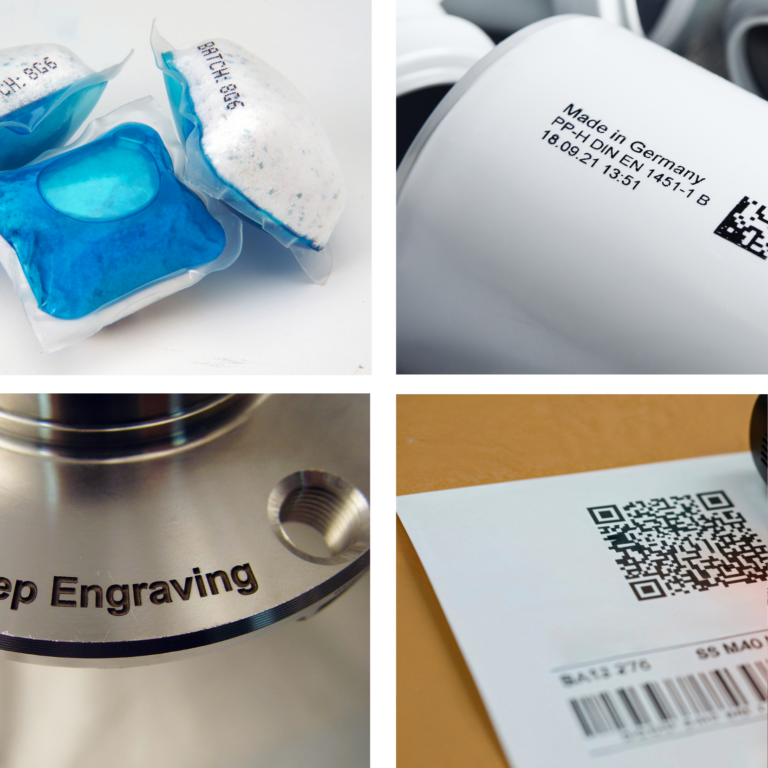
When speed and quality meet In modern production environments, companies face a clear challenge: processes must become
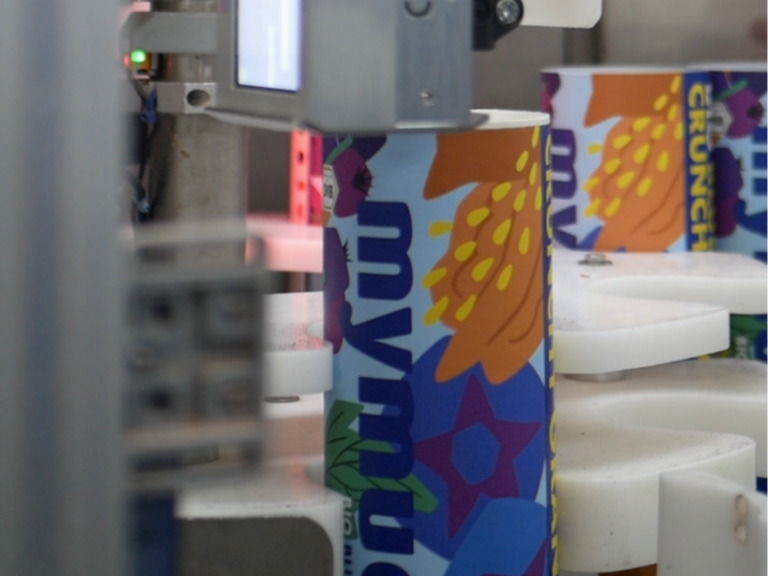
How mymuesli significantly reduces maintenance efforts with the edding in-line 12, avoids contamination in production, and sustainably
The demands placed on labeling systems in medium-sized businesses are constantly increasing. Legal requirements, rising raw material
You are currently viewing a placeholder content from Vimeo. To access the actual content, click the button below. Please note that doing so will share data with third-party providers.
More InformationYou are currently viewing a placeholder content from YouTube. To access the actual content, click the button below. Please note that doing so will share data with third-party providers.
More InformationYou need to load content from reCAPTCHA to submit the form. Please note that doing so will share data with third-party providers.
More InformationYou are currently viewing a placeholder content from Google Maps. To access the actual content, click the button below. Please note that doing so will share data with third-party providers.
More InformationYou are currently viewing a placeholder content from Google Maps. To access the actual content, click the button below. Please note that doing so will share data with third-party providers.
More InformationYou are currently viewing a placeholder content from Mapbox. To access the actual content, click the button below. Please note that doing so will share data with third-party providers.
More InformationYou are currently viewing a placeholder content from OpenStreetMap. To access the actual content, click the button below. Please note that doing so will share data with third-party providers.
More Information